How ENGR 1186.01 Assignments Enhance Understanding of Engineering Graphics and CAD

- Assignment Design and Learning Objectives in ENGR 1186.01
- Emphasis on Spatial Visualization Skills
- Linking Visualization with CAD Execution
- CAD-Based Assignments and Technical Skill Development
- Feature-Based Modeling and Parametric Design
- Assembly Modeling and Component Interaction
- Engineering Graphics Interpretation Through Assignments
- Conversion Between 2D Drawings and 3D Models
- Application of Dimensioning and Drawing Standards
- Communication Integration Within ENGR 1186.01 Assignments
- Written Explanation of Design and Modeling Steps
- Visual Presentation and Organization of Outputs
- Challenges in ENGR 1186.01 Assignments and Skill Improvement
- Managing CAD Complexity and Error Correction
- Handling Iterative Workflows and Time Constraints
ENGR 1186.01 at The Ohio State University is structured to strengthen engineering graphics and CAD proficiency for transfer students entering the engineering curriculum. The course does not revisit introductory topics; instead, it places students directly into assignments that require interpretation, modeling, and communication of engineering designs. These assignments are carefully aligned with industry expectations, where engineers must convert abstract ideas into precise graphical and digital representations while maintaining strict accuracy in dimensions and constraints. Because of the technical depth, detailed workflows, and time-intensive nature of these tasks, many students seek AutoCAD assignment help to better understand complex modeling procedures, resolve errors in sketches and assemblies, and ensure their submissions meet academic standards. Through repeated engagement with CAD tools, structured assignments, and graphical standards, students gradually build the ability to visualize, construct, refine, and communicate engineering designs with clarity and precision.
Assignment Design and Learning Objectives in ENGR 1186.01
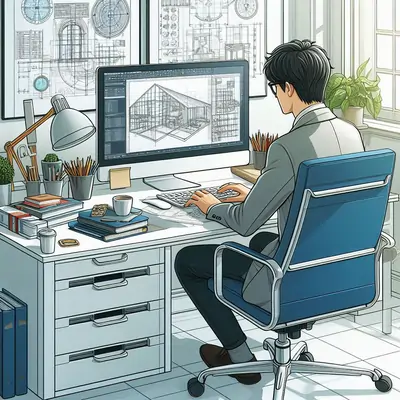
Assignments in ENGR 1186.01 are built to connect engineering graphics with hands-on CAD implementation. Each task is structured to reinforce a specific learning outcome, ensuring that students actively apply visualization and modeling skills rather than passively learning concepts. The course prioritizes applied understanding, where every assignment contributes directly to skill development.
Emphasis on Spatial Visualization Skills
Spatial visualization is a central component of ENGR 1186.01 assignments. Students are frequently required to interpret multiple views of an object and mentally reconstruct its full geometry before modeling it in CAD software. This process strengthens their ability to understand shapes, dimensions, and relationships within complex designs.
Assignments often involve:
- Interpreting orthographic projections with missing or hidden details
- Identifying how different views correspond to a single object
- Visualizing internal features using section representations
These exercises push students to think beyond flat drawings. Instead of simply copying dimensions, they must analyze how each element contributes to the overall geometry. Visualization becomes a problem-solving activity, where incorrect assumptions lead to modeling errors. Over time, repeated exposure to such tasks improves accuracy and confidence in handling engineering graphics.
Linking Visualization with CAD Execution
A key strength of ENGR 1186.01 assignments is the immediate transition from visualization to CAD modeling. Students do not stop at interpreting drawings; they must translate their understanding into precise digital models.
This involves:
- Creating sketches based on interpreted geometry
- Applying geometric and dimensional constraints
- Building 3D features that reflect the intended design
This linkage ensures that theoretical understanding is continuously tested through practical execution. If a student misinterprets a drawing, the error becomes evident during modeling, forcing them to revisit and correct their understanding. This iterative cycle enhances learning by connecting thought processes with tangible outputs.
CAD-Based Assignments and Technical Skill Development
CAD assignments form the backbone of ENGR 1186.01. These tasks are designed to develop technical proficiency while introducing students to professional modeling practices used in engineering environments. Accuracy, structure, and efficiency are emphasized throughout.
Feature-Based Modeling and Parametric Design
Students are required to use feature-based modeling techniques, which form the foundation of modern CAD systems. Instead of drawing static shapes, they create models that can be modified dynamically through parameters and constraints.
Typical assignment requirements include:
- Creating base sketches with fully defined constraints
- Using features such as extrude, revolve, and loft
- Applying dimensions that control the overall geometry
Parametric design plays a significant role in enhancing understanding. When students modify a dimension and observe how the model updates automatically, they begin to understand the relationships between different parts of the design. This approach teaches them to think in terms of dependencies rather than isolated elements.
Assignments also emphasize clean modeling practices. Students must organize their features logically, ensuring that models remain editable and error-free. This requirement reflects real engineering workflows, where poorly structured models can lead to complications during design revisions.
Assembly Modeling and Component Interaction
As students progress, assignments introduce assembly modeling, where multiple parts are combined into a single system. This stage requires a deeper understanding of how individual components interact.
Students must:
- Position parts relative to each other using constraints
- Ensure compatibility between mating surfaces
- Analyze movement and alignment within assemblies
These assignments simulate real-world engineering scenarios, where components must function together without interference. Students learn to anticipate potential conflicts, such as overlapping geometry or incorrect alignments, and resolve them through careful adjustments.
Assembly tasks also highlight the importance of consistency. A small error in one component can affect the entire system, reinforcing the need for precision at every stage of modeling.
Engineering Graphics Interpretation Through Assignments
ENGR 1186.01 assignments play a crucial role in developing the ability to interpret and produce engineering graphics. This skill is essential for communicating designs accurately and ensuring that they can be understood by others in a professional setting.
Conversion Between 2D Drawings and 3D Models
One of the most important learning outcomes is the ability to move between 2D and 3D representations. Assignments require students to both interpret drawings and generate them from models.
Tasks typically include:
- Creating 3D models from dimensioned 2D sketches
- Generating orthographic projections from completed models
- Producing section views to reveal internal features
This process enhances understanding by demonstrating how different representations convey the same information. Students learn to identify inconsistencies, such as missing dimensions or incorrect proportions, and correct them during modeling or drawing creation.
The repeated conversion between formats reinforces the connection between engineering graphics and CAD. Students begin to see drawings not just as static images but as instructions for building accurate models.
Application of Dimensioning and Drawing Standards
Assignments also focus on applying standard dimensioning and annotation practices. Students must present their work in a way that meets engineering conventions and communicates information clearly.
Key requirements include:
- Placing dimensions in logical and readable positions
- Using standard symbols and notation
- Maintaining consistent scaling and layout
These practices ensure that drawings are not only accurate but also usable. In engineering, a drawing must provide enough information for someone else to reproduce the design without ambiguity. Assignments in ENGR 1186.01 reinforce this principle by evaluating both correctness and clarity.
Students gradually develop the ability to produce professional-quality drawings, which is essential for future coursework and industry applications.
Communication Integration Within ENGR 1186.01 Assignments
ENGR 1186.01 integrates communication into technical assignments, ensuring that students can explain and present their work effectively. This aspect of the course highlights the importance of clarity in engineering practice.
Written Explanation of Design and Modeling Steps
Assignments often require written documentation that explains how the model was created and why certain decisions were made. This component ensures that students understand their work beyond the mechanical execution of CAD commands.
Students are expected to:
- Describe the sequence of modeling steps
- Justify design choices based on given requirements
- Reflect on challenges encountered during the process
Writing about their work encourages deeper understanding. It forces students to organize their thoughts, identify gaps in their reasoning, and articulate their approach clearly. This skill is particularly valuable in collaborative environments, where engineers must communicate their ideas to team members.
Visual Presentation and Organization of Outputs
In addition to written explanations, students must present their graphical work in a structured and professional manner. This includes organizing drawings, models, and supporting materials effectively.
Requirements often include:
- Clear labeling of views and components
- Consistent formatting across multiple drawings
- Logical arrangement of information for easy interpretation
Assignments simulate real-world scenarios where engineers present their designs to clients, instructors, or team members. Poorly organized visuals can lead to confusion, even if the underlying design is correct. By focusing on presentation, ENGR 1186.01 ensures that students develop both technical and communication skills.
Challenges in ENGR 1186.01 Assignments and Skill Improvement
ENGR 1186.01 assignments are designed to enhance understanding, but they also introduce challenges that require careful attention and consistent effort. These challenges contribute to skill development by encouraging students to refine their approach.
Managing CAD Complexity and Error Correction
CAD software used in ENGR 1186.01 can be complex, especially for students who are new to advanced modeling tools. Assignments require precision, and even small mistakes can lead to significant issues.
Common challenges include:
- Over-constrained or under-constrained sketches
- Incorrect feature selection leading to flawed geometry
- Misalignment in assemblies
- Difficulty identifying the source of errors
Students must learn to troubleshoot these problems systematically. This process enhances their understanding of how CAD systems operate and improves their ability to produce accurate models. Over time, they develop strategies to avoid common mistakes and work more efficiently.
Handling Iterative Workflows and Time Constraints
Assignments in ENGR 1186.01 are rarely completed in a single attempt. Students must refine their work through multiple iterations, correcting errors and improving accuracy.
Time-related challenges include:
- Revising models after identifying inconsistencies
- Adjusting designs to meet updated requirements
- Preparing final submissions with proper formatting and documentation
This iterative workflow reinforces learning by requiring repeated application of concepts. However, it also demands effective time management. Students who plan their work and allocate sufficient time for revisions are better able to meet the course requirements.